
Horizontal Depressurisation Drilling Contractor in WA
Boretech Contracting drills horizontal depressurisation drains for open-pit mines and civil slopes across the Goldfields, Pilbara, Mid West and metropolitan WA, relieving groundwater pressure inside a wall so the ground holds the angle it was designed to.
Depressurisation drilling sits on the same foundation that built our business: hard-rock directional drilling. With more than 50 years’ combined industry experience and a fleet of over 200 items of plant, we drill long, gravity-grade holes into pit walls and batters, install the slotted liner, and present the drains flowing to a controlled discharge point.
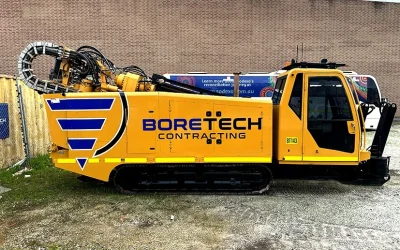
Contact Us
What Is Horizontal Depressurisation Drilling?
Water inside a slope is what makes it fail. Pore water pressure behind a pit wall lowers the effective stress in the rock or soil mass, which cuts its shear strength and pushes the wall toward failure. Horizontal depressurisation drilling targets that pressure directly: a series of long holes is drilled into the wall on a slight upward grade so groundwater drains out under gravity, the phreatic surface is drawn down, and the wall regains the strength to stand at its designed angle.
The payoff for a mine is twofold. Stability and safety come first, but depressurised walls can also be cut steeper, which lifts the strip ratio and the ore the pit can reach. It is a geotechnical control measure, not a utility install, and that is the distinction Boretech is set up for.
Boretech delivers the full drilling scope behind a depressurisation program, including:
- Long horizontal and sub-horizontal drain holes drilled into pit walls, batters and benches on gravity grade
- Drilling through hard rock, weathered profiles and reactive ground using the right rig and mud program for the formation
- Supply and installation of slotted or screened PVC and HDPE liner to keep the hole open and screen the inflow
- Collar standpipes, headworks and connection of the drain to a controlled discharge line or collection sump
- Re-drilling, flushing and rehabilitation of existing drains that have silted, collapsed or stopped flowing
- Coordination with the client’s geotechnical and hydrogeology teams on hole layout, inclination, depth and as-drilled records


Why Clients Choose Boretech for Depressurisation Drilling in WA
This is hard-rock drilling done to a geotechnical purpose. The hole has to reach depth in difficult ground, sit on grade, take its liner, and flow. Boretech is built around exactly that combination of rock-drilling capability and field discipline.
More Than 50 Years of Drilling Experience Behind Every Hole
Boretech is recognised across WA for hard-rock directional drilling in the mining and renewables sector, and depressurisation work draws on the same hard-won experience. Our supervisors and project managers carry more than 50 years’ combined industry experience between them, and that depth shows in the calls that matter on a drain program: rig and bit selection for the formation, the mud program that keeps a long hole open in reactive or fractured ground, and the judgement to keep a hole on grade so it actually drains.
- More than 50 years of combined experience across our supervisors and project managers
- A track record drilling granite, hard rock and weathered profiles, not just soft-ground utility bores
- Founded and still run by hands-on owners who came up through civils and drilling
- Crews who have proven themselves in the mining sector, not general civil crews learning rock on your site
Mining-Sector Drilling, Not General Civil Work
Most contractors who own a drill rig are set up for utility bores in sand. Boretech has worked inside open-pit mining operations and across remote resource sites, drilling for the mining and renewables sector alongside its network and utilities work. Crews understand pit environments, ground control plans, and the difference between a hole that looks finished and a drain that performs.
- Experience working within active open-pit mining operations and resource sites
- Drilling delivered for mining clients including work at the Karara open-pit iron ore operation
- Comfortable with mine inductions, ground control management plans and pit traffic management
- Understanding that a depressurisation drain is judged on flow and as-drilled accuracy, not metres alone
Company-Owned Rigs and Support Fleet
Boretech operates over 200 items of plant from its Balcatta and Kalgoorlie bases, drilling rigs through to the support gear a drain program needs, maintained in-house and mobilised on our schedule rather than a hire company’s.
- A range of drill rigs sized for tight bench access through to deep, long-reach drains
- In-house mud mixing and fluid management to suit hard rock, clay and fractured ground
- Vacuum trucks for spoil and mud management and for keeping benches clean and trafficable
- A maintained, owned fleet that turns up ready and stays on site
A Goldfields Base Built for Mine Work
Depressurisation drilling happens where the pits are. Boretech runs a regional base in Kalgoorlie alongside its Perth workshop, which cuts mobilisation cost and travel time into the Goldfields and out to Mid West and Pilbara operations, and lets crews respond when a wall needs attention rather than waiting on a long mobilisation from the coast.
- Kalgoorlie base for faster, cheaper mobilisation into Goldfields open-pit operations
- Reach across the Mid West, Murchison and Pilbara mining regions from owned regional capability
- Crews and plant already set up for fly-in fly-out and drive-in drive-out rosters
- Local presence for follow-up work, drain rehabilitation and ongoing programs
Drilling to the Geotechnical Design
A depressurisation hole is only useful if it lands where the hydrogeologist needs it, on the grade that lets it drain, and is recorded accurately enough to trust. Boretech drills to the design and gives the as-drilled record back, so the geotechnical team can read the result against their pore pressure model.
- Holes drilled to designed azimuth, inclination and depth with as-drilled records provided
- Close coordination with the client’s geotechnical and hydrogeology engineers throughout
- Liner type and screen detail installed to specification, not substituted on site
- Drain flows measured and presented at handover so the program can be assessed against target
How Boretech Delivers Effective Depressurisation Programs
Boretech applies the same disciplined process to every drilling program, whether it is a single batter that has started to move or a staged drain campaign down a developing pit.
Turning Geotechnical Designs Into Successful Drain Installations
Every project begins with a detailed review of the geotechnical and hydrogeological objectives behind the drain design.
Before mobilisation, Boretech assesses:
- Drain locations and target depths
- Hole azimuth and inclination requirements
- Bench geometry and access constraints
- Expected geology and groundwater conditions
- Liner specifications and discharge requirements
- Operational and production interfaces
This upfront planning allows drilling methods, rig selection and fluid systems to be tailored to site conditions before work begins, reducing risk and improving execution once crews are on the wall.
Delivering Accuracy in Challenging Ground Conditions
The performance of a depressurisation drain depends on where it finishes, not simply where it starts.
Boretech focuses on maintaining hole alignment and grade throughout the entire drilling process to ensure drains perform as designed.
Key capabilities include:
- Long-hole directional accuracy
- Hole stability management in fractured ground
- Drilling through variable geological conditions
- Formation-specific drilling fluid programs
- Continuous monitoring of drilling performance
- Maintaining clean, open holes ready for liner installation
This approach helps maximise drain effectiveness while minimising costly rework and installation failures.
Building Drainage Systems for Long-Term Reliability
A drain is only valuable if it continues performing years after installation.
Boretech designs and installs drainage systems with long-term functionality in mind, considering:
- Ground conditions and expected inflows
- Liner selection and screen configuration
- Sediment management requirements
- Future maintenance accessibility
- Drain development and cleaning requirements
- Connection to site water management systems
By focusing on lifecycle performance rather than installation alone, Boretech helps clients reduce maintenance requirements and improve drainage reliability.
Providing Data That Supports Better Decisions
Each drain installation generates valuable information about groundwater conditions and wall behaviour.
Boretech delivers detailed records that support:
- Pore pressure model validation
- Geotechnical assessments
- Hydrogeological analysis
- Future drain targeting
- Program performance reviews
- Ongoing slope management strategies
Comprehensive as-drilled documentation gives site teams confidence that installed drains align with design intent and provides a reliable basis for future planning.
Supporting Depressurisation Throughout the Mine Life Cycle
Groundwater conditions change as pits deepen, walls advance and mining progresses. Effective depressurisation requires continuous management rather than one-off installation campaigns.
Boretech supports ongoing drainage performance through:
- New drain installation programs
- Drain rehabilitation and cleaning
- Re-drilling collapsed or blocked drains
- Drain network expansion
- Performance assessment and troubleshooting
- Support for staged pit development
This long-term approach helps mining operations maintain drainage effectiveness and protect the value of their depressurisation investment.
Supporting Slope and Groundwater Management Across Multiple Sectors
Boretech works with the organisations responsible for managing unstable slopes, groundwater pressure and drainage performance across Western Australia, South Australia and New South Wales.
Open-Pit Mine Operators
Mine operators need pit walls that hold the designed angle and depressurisation programs that keep performing as mining progresses. Boretech drills horizontal drains into pit walls, batters and cutbacks, installs the specified liner, develops each drain and rehabilitates existing drains where flow has reduced. This supports everything from a single problem batter to staged depressurisation campaigns across a developing pit.
Geotechnical and Hydrogeology Consultants
For engineers designing a depressurisation strategy, accuracy and data quality matter. Boretech drills to the specified azimuth, inclination and depth, installs the required liner system, and provides measured flows and as-drilled records that can be read against pore pressure models. This gives consultants reliable field data to support design validation, performance reviews and future drain planning.
Principal Contractors and Mining Services Providers
For contractors managing pit works or slope stabilisation packages, Boretech provides a self-performing drilling partner for the full drain installation sequence. This can include: Drill planning support Horizontal drain drilling Liner installation Drain development and flushing Discharge connection As-drilled documentation By keeping the work under one specialist crew, Boretech reduces interfaces and helps keep critical drainage programs moving.
Civil, Transport and Infrastructure Slopes
Horizontal drainage is not limited to mining. Road cuttings, rail corridors, batters and embankments often rely on the same principle: reducing pore pressure to support slope stability. Boretech drills depressurisation and relief drains into civil and infrastructure slopes where groundwater pressure threatens performance, working alongside road, rail and utility stakeholders under live access, traffic and safety controls.
Licences, Accreditations and Safety
Licences and Registrations
- EC Licence: 14748
- WorkSafe Restricted Asbestos Removal Licence: WR2407
- ABN: 68 623 214 497
- ACN: 623 214 497
- Compliant with the Work Health and Safety Act 2020 (WA)
Safety and Compliance
- All field personnel trained in SWMS compliance and service strike prevention
- DBYD referral and on-site utility locating completed before mobilisation on every project
- NDD used to positively expose services before any mechanical works commence
- Experienced under live traffic management plans, road reserve permits, and environmental management plans
- WorkSafe Restricted Asbestos Removal Licence WR2407 held for ACM encountered during excavation
Recent Hard-Rock Drilling Projects
Depressurisation drilling draws directly on Boretech’s hard-rock and difficult-ground drilling record. These recent projects show the rock-drilling, water and remote-site capability that the service is built on.
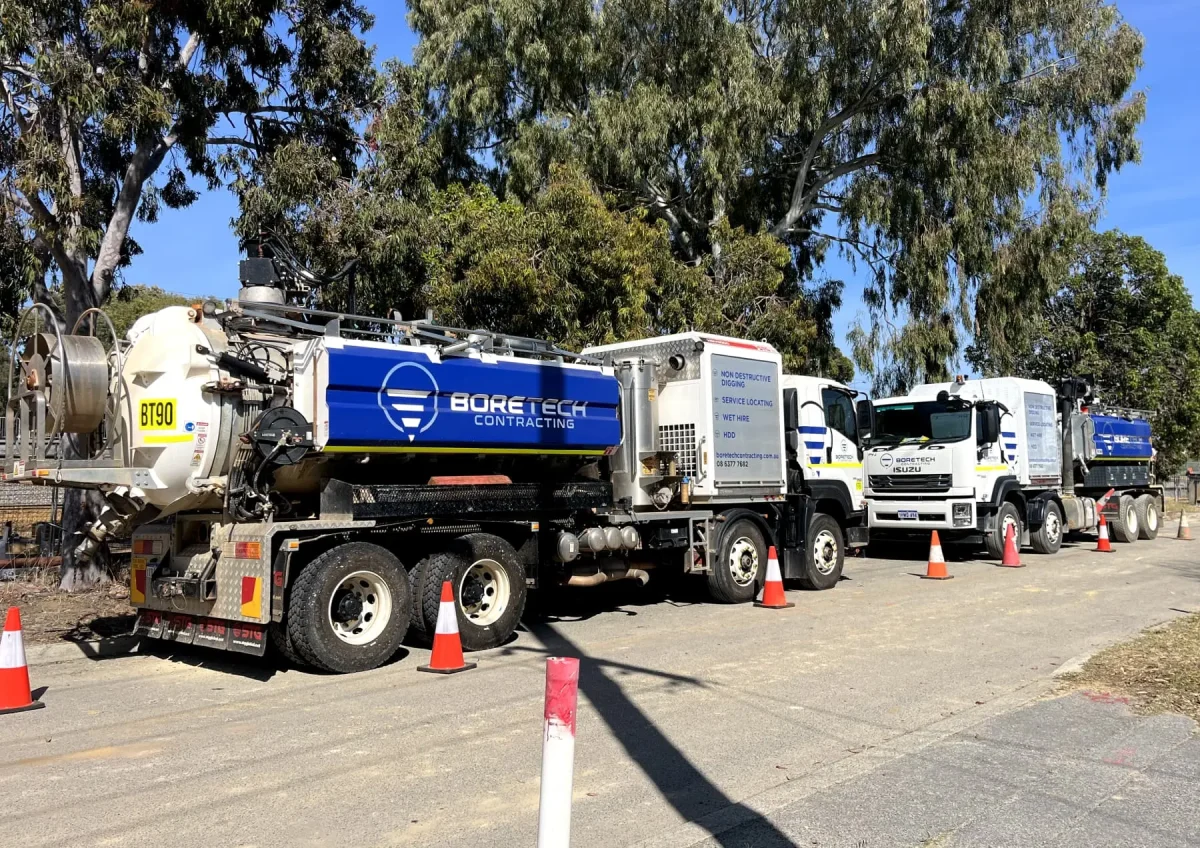
Kenwick Rail Crossing, Perth WA
Boretech delivered a time-critical HDD installation at Kenwick, including a 630mm HDPE sleeve that remains one of the largest pipes the company has installed in the Perth metro area. The crew drilled through reactive swelling clays, sand and a high water table, selecting and adjusting the mud program to hold the hole in difficult, wet ground, the same fluid-management challenge that defines long drains in a saturated wall.
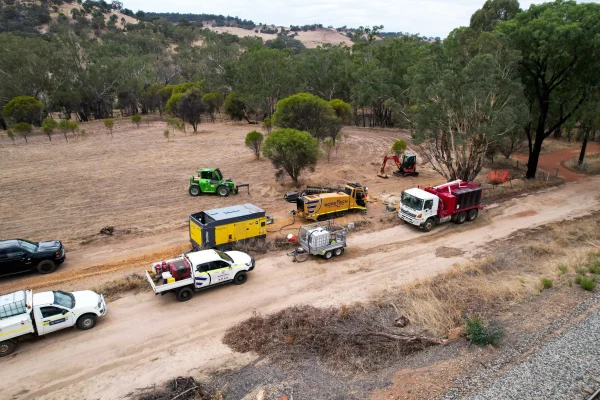
IEN Avon Valley Project, WA
Boretech was engaged by THM Electrical to deliver hard-rock drilling through the Avon Valley on the IEN project, in environmentally and culturally sensitive ground. Drilling cleanly through hard rock while protecting sensitive terrain is exactly the control depressurisation work in a pit wall requires.
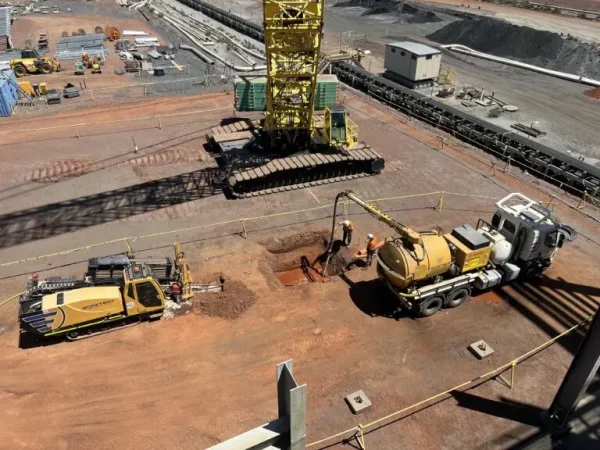
Karara Mine Site, Mid West WA
Boretech delivered drilling works at the Karara open-pit iron ore operation in the Mid West, one of the region’s largest hard-rock mining sites. Working inside an active mining environment, the project drew on the rig capability, fluid management and remote-site discipline that depressurisation drilling in an open pit demands.
Locations We Serve Across WA and Australia
Boretech operates from our Balcatta workshop and Perth office, with a regional base in Kalgoorlie supporting faster mobilisation into the Goldfields and regional WA.
Perth Metropolitan Areas
- Balcatta
- Joondalup
- Osborne Park
- Morley
- Ellenbrook
- Midland
- Malaga
- Cannington
- Rockingham
- Armadale
- Fremantle
- Canning Vale
- Cockburn
- Mandurah
- Stirling
- Wanneroo
- Bassendean
- Bayswater
- Belmont
- Victoria Park
- Subiaco
- Nedlands
- Claremont
- Cottesloe
- Karrinyup
- Scarborough
- Inglewood
- Mount Lawley
- Mirrabooka
- Nollamara
- Bentley
- Thornlie
- Gosnells
- Maddington
- Kenwick
- Wangara
- Landsdale
- Dianella
- Yokine
- Innaloo
Regional and Goldfields WA
- Kalgoorlie
- Geraldton
- Esperance
- Albany
- Karratha
- Port Hedland
- Dampier
- Newman
- Broome
- Tom Price
- Carnarvon
- Exmouth
- Merredin
- Narrogin
- Northam
- York
South West WA
- Bunbury
- Busselton
- Margaret River
- Collie
- Harvey
- Capel
- Dunsborough
- Manjimup
- Bridgetown
Interstate
- Adelaide SA
- Sydney NSW
Frequently Asked Questions About Horizontal Depressurisation Drilling
Horizontal depressurisation drilling involves drilling long, near-horizontal drain holes into a slope or pit wall on a slight upward grade. This allows groundwater to flow out under gravity, reducing pore water pressure within the rock mass.
By lowering pore pressure, the wall gains effective strength and is better able to maintain its designed angle. In open-pit mining, horizontal drains are a critical slope stability measure. Boretech delivers the complete installation, including drilling, liner installation and discharge connection.
Pore water pressure reduces the effective stress holding rock and soil together, lowering the strength of the slope. As groundwater pressure increases, the risk of instability and slope failure also increases.
Horizontal drains relieve this pressure by providing a controlled pathway for groundwater to escape. This improves wall stability and can help operators safely maintain steeper pit wall angles where supported by the geotechnical design.
A dewatering bore is typically a vertical well used to lower the regional groundwater table through pumping.
A horizontal depressurisation drain is a passive, gravity-fed drain drilled directly into a pit wall or slope to relieve pressure behind that specific face. Both methods can form part of the same groundwater management strategy, but they serve different purposes.
Yes. Boretech specialises in hard-rock drilling and has delivered complex directional drilling projects across Western Australia’s mining and infrastructure sectors.
Our experience includes drilling through competent and fractured rock formations where maintaining hole stability, accuracy and grade is critical to drain performance.
Drain length and diameter are determined by the geotechnical design and vary from project to project.
Factors influencing drain design include:
- Slope geometry
- Ground conditions
- Target drainage zone
- Required discharge capacity
- Bench access constraints
Boretech drills to the specified azimuth, inclination, depth and diameter while selecting the most suitable rig and drilling fluid program for site conditions.
Yes. Boretech supplies and installs slotted or screened PVC and HDPE liner systems as specified by the design.
Our scope can include:
- Liner installation
- Collar standpipes and headworks
- Drain development and flushing
- Connection to discharge systems
Correct screen selection is critical to long-term performance and is installed in accordance with the project specification.
Always.
Depressurisation programs are developed by geotechnical and hydrogeology teams, and Boretech’s role is to accurately deliver the drilling component of that design.
We drill to the specified locations, depths and angles and provide detailed as-drilled records and flow measurements to support ongoing groundwater and slope stability assessments.
Drain discharge is directed to the collection system nominated within the project design, such as a controlled drain line, collection point or sump.
Managing discharge correctly is important to prevent water from impacting bench access, trafficability or slope conditions.
Yes. Boretech operates from both Perth and Kalgoorlie, allowing efficient mobilisation throughout Western Australia’s major mining regions.
We regularly support projects across:
- Goldfields
- Mid West
- Murchison
- Pilbara
- Regional South Australia
- Regional New South Wales
Our regional capability reduces mobilisation times and supports responsive project delivery.
Yes.
Over time, drains can lose performance due to sediment build-up, collapse or reduced flow. Boretech provides rehabilitation services to restore functionality and extend the life of existing depressurisation infrastructure.
Services include:
- Drain flushing
- Re-drilling
- Rehabilitation works
- Drain extensions
- Additional drain installation
Pore pressure monitoring is typically managed by the site’s geotechnical team using piezometers and other monitoring systems.
Boretech works closely with these teams to ensure drilling activities align with monitoring requirements. Where monitoring installations require drilling support, this can be incorporated into the project scope during planning.
Talk to a Team That Drills Hard Rock Every Day
From depressurisation drains in an open-pit wall to relief drilling in a civil cutting, Boretech delivers slope drainage drilling safely, on grade, and to the geotechnical design across WA, SA and NSW. Backed by more than 50 years’ combined experience.
Contact us today to discuss your project scope and receive a no-obligation quote.
For project and job enquiries: estimating@boretechcontracting.com.au (08) 6377 7682
Vac truck hire enquiries: vactruck@boretechcontracting.com.au
Workshop and office: 5 Kenhelm St, Balcatta WA 6021
Regional office: 96 Egan St, Kalgoorlie WA 6430
Licences: EC 14748 | WorkSafe Asbestos WR2407 | ABN 68 623 214 497

